

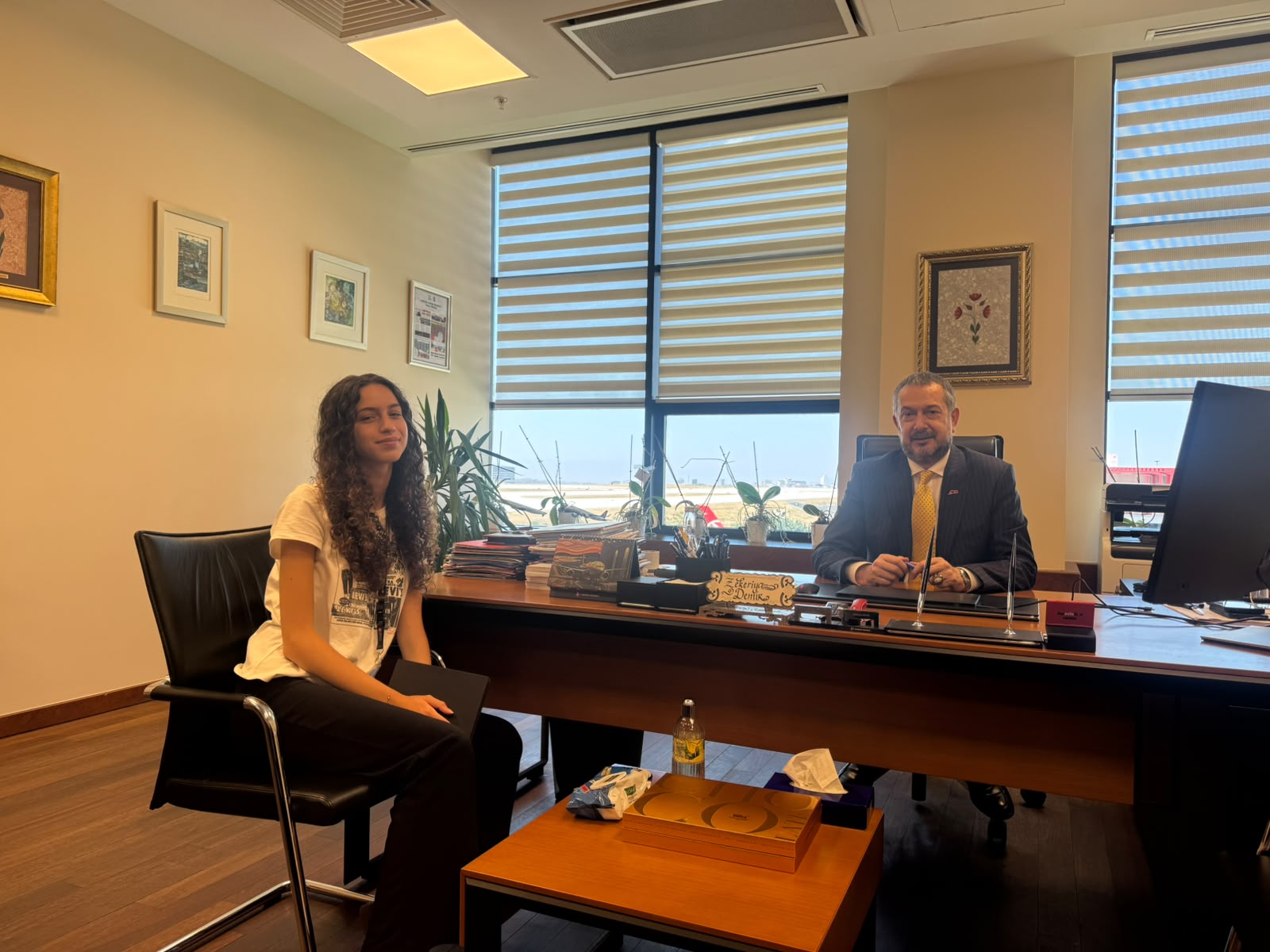
Elif Derin: Hello, today I am joined by Assoc. Prof. Dr. Zekeriya Demir, the current CFO of Turkish Airlines Technic. He is a prominent figure known for his extensive experience in academia, the defense industry, and international accounting. Hello, Mr. Demir.
Zekeriya Demir: Hello.
Elif Derin: Thank you very much for agreeing to see me. I have prepared a few questions; with your permission, I would like to ask them.
Zekeriya Demir: You’re welcome. Please, go ahead.
Elif Derin: You have a multifaceted career spanning academia, the defense industry, and aviation. How has your academic background shaped your approach to real-world financial strategies as a CFO?
 Zekeriya Demir: Of course, academia requires you to look at things from a broader perspective, from a more macro point of view. And it is a field where you constantly need to keep your curiosity for learning alive. So when we applied that academic curiosity for learning to matters of finance and accounting — where is the industry heading globally, where do we stand, what are we doing too little of, what are we doing too much of — it proved important for keeping track of all this. And we continuously monitor the changes our competitors make in their financial strategies and accounting policies, and we try to reflect these in our own policies and practices regarding where our company should be.
Elif Derin: Alright. In such an enormous organization, with thousands of employees and operational components, what are the two or three most critical financial indicators you look at every morning to check the company’s health?
Zekeriya Demir: The first thing we look at here is, of course, exchange rates. That is, the dollar/euro parity, interest rates, and, on a monthly basis of course, the inflation indicator are very important for us. Although the MRO industry is regarded as something highly technical — after all, we perform aircraft maintenance — it is nevertheless a very labor-intensive industry. We work with roughly 11,500 direct and close to 4,000 indirect employees, some 15,000-16,000 people in total. Therefore, in terms of controlling costs here, since these inflation indicators affect both our personnel costs and our labor costs, we closely monitor exchange rates, inflation, and interest rates.
Elif Derin: Thank you. Turkish Technic makes major investments in technology and infrastructure. How does your finance department balance the necessity of such expensive, long-term investments with the company’s short-term profitability targets?
Zekeriya Demir: Well, let me put it this way: we manage a very large inventory here. To carry out this kind of inventory management, you need software behind it that enables very good financial reporting. We use SAP for our financial and accounting processes. We handle our aircraft maintenance records and inventory management with an MRO software called Trax. Without these, it is impossible to manage this enormous inventory and ensure operational continuity. Therefore, as in the aviation industry, companies in many other industries also need to invest seriously in these ERP systems and produce solid reports. Otherwise, it would not be possible to determine and report where you are and where you are going, or to identify certain risks in advance. So you need to move information technology and business needs forward together, in a balanced way. The investment made in these should be regarded not as a cost or expense item, but as something necessary that ensures the continuity of the business.
 Elif Derin: Thank you. The global transformation focused on sustainability and green aviation is growing. How is your finance department preparing for the costs and long-term implications of transitioning to more environmentally friendly maintenance operations?
Zekeriya Demir: Well, globally, for what we call green investments — investments related to sustainability — you have access to more favorable credit opportunities in the markets. Both our parent company Turkish Airlines and we at Turkish Airlines Technic carry out sustainability reporting. We regard these practices not merely as compliance with sustainability standards, but as part of our responsibility toward the environment and people. Especially in our new investments, through the systems we have established, our occupational health, safety and environment directorate is carrying out very serious work on water recycling, obtaining water from rainwater, and recycling the fuels and oils drained from aircraft.
Elif Derin: Okay, now I have a couple of questions about Turkish Technic’s strategy and growth. You have a massive joint venture: the Rolls-Royce aircraft engine facility that will start operating at Istanbul Airport in 2027. This is a very large project — what would you say about its contributions to our country?
Zekeriya Demir: Of course, this is very important. In Türkiye there is currently only one company performing narrow-body engine maintenance, and there we have a partnership with Pratt & Whitney. There is no investment performing wide-body engine maintenance. With this investment, our country will gain wide-body engine maintenance capability, and it will also make a significant contribution to Turkish Airlines’ operational efficiency. In this way, a substantial accumulation of experience and a contribution to skilled human resources will be achieved in Türkiye in both narrow-body and wide-body aircraft engine maintenance. From an economic standpoint as well, since wide-body aircraft engine maintenance is currently performed abroad, once this maintenance begins to be carried out domestically, Türkiye’s service export revenues will increase and it will make very important contributions to the foreign trade balance. Moreover, this investment will also be of great importance for the employment of our country’s qualified workforce. In this sense, we attach great importance to this investment; as an entire team, we all believe it will bring significant benefits to both the country and the industry, and we are moving forward with the investments at a rapid pace.
Elif Derin: Alright, moving on to my next question. You serve not only Turkish Airlines but airlines from all over the world. How do you remain competitive in your pricing and services against the other giant competitors in Europe and Asia?
Zekeriya Demir: Well, Türkiye has very serious engineering and technician capabilities. It has a young population, and every year Türkiye produces a significant number of graduates from aviation-related programs. Until recently, yes, Türkiye had serious advantages in pricing. But in the global balance that shifted after the pandemic, Türkiye has unfortunately gradually begun to lose this advantage in labor costs. Given this situation, we are changing our ways of doing business and, through more efficient, more effective, and dynamic planning, trying to offset this rising labor cost with effectiveness and efficiency. And today, as you also mentioned, we provide both aircraft maintenance services and component services to different airlines from all over the world. Of course, we can say that the rise in inflation in recent years and the exchange rate policy pursued have also played a role in the loss of these labor cost advantages. To compensate for these disadvantages, we are working on different pricing policies and offering our customers new alternatives.
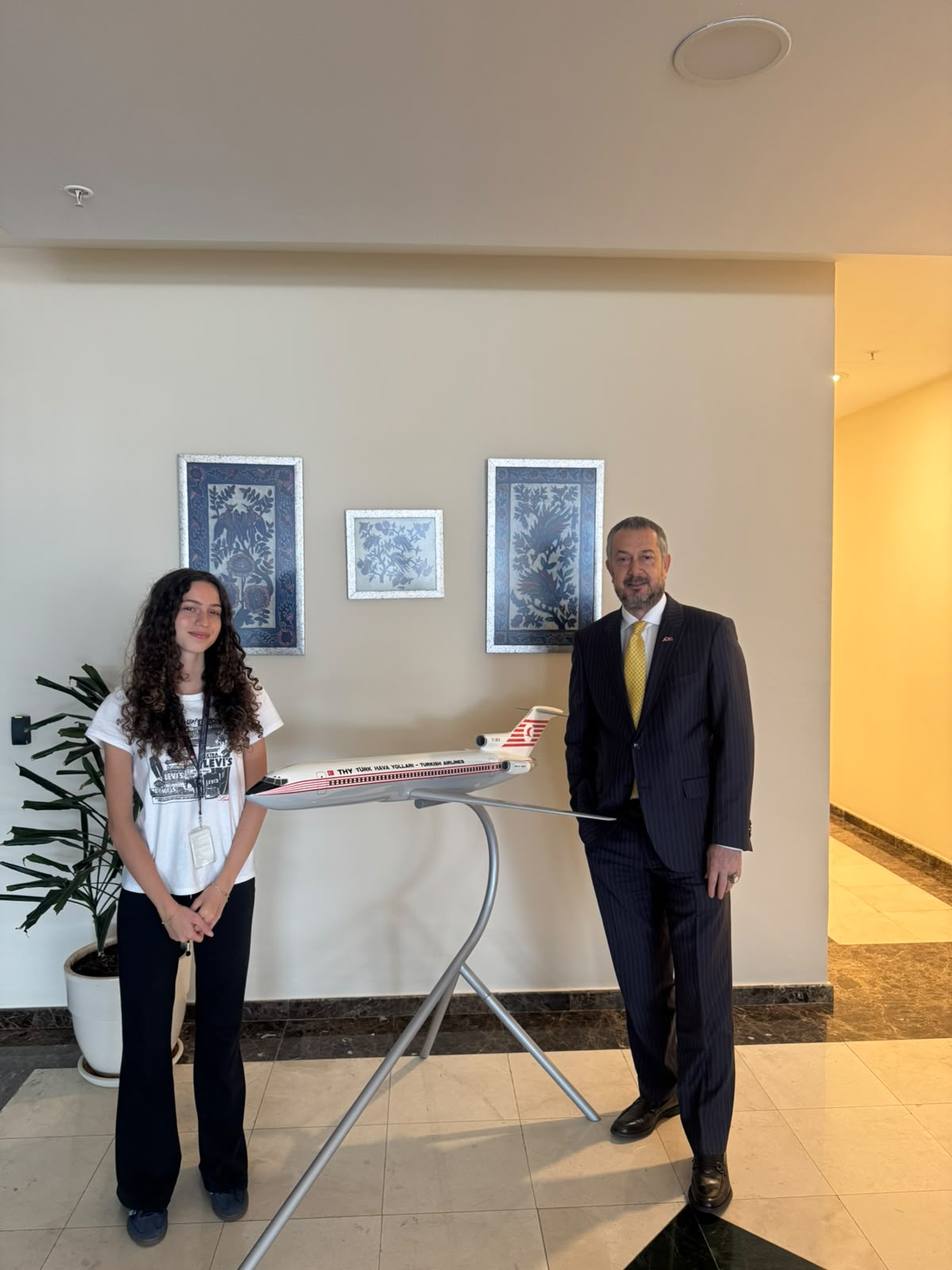 Elif Derin: Finally, I would like to ask you for some career advice. As an 11th-grade student interested in business and finance, beyond basic mathematics and accounting, what do you think are the most valuable skills for the future finance leaders of the aviation industry? May I have your advice, please?
Zekeriya Demir: Yes, when it comes to finance, aviation is, in my view, the pinnacle of this field. Looking at 2025, the industry average earned per passenger is 10 dollars. And today, if you set out to buy a passenger aircraft, you need to commit roughly between one hundred million and two hundred million dollars, and then you will earn that money back 10 dollars at a time. This requires very good human resources, pricing, sales, supply chain, logistics management, and operational capability. Also, one of the things sought in the business world lately, alongside knowledge, is resilience. That is, how resistant you are to this stress, to this process, is becoming very important. Because aviation, as I said, is a very intense industry, and its dynamics change very quickly, which is why agility, resistance, and resilience are becoming very important. And here, in my view, one of the most important things in all of professional life is curiosity. I mean, we do a job, but how do others do it? Analyzing competitors very well, adopting their best practices. We have a saying: ‘I know a thing or two; others know a thousand and two.’ From this standpoint, to be successful you have to closely follow others’ experience, their ways of doing business, competitors’ behavior, their financials, and the new programs they announce, and adjust your business model and your way of doing business accordingly… But to do all of this, I believe you must not kill your sense of curiosity, that thing inside you that constantly asks questions. And I believe this will always keep you sharp, ahead in your field, and someone in demand.
Elif Derin: Well, thank you very much. That was all of my questions. Thank you again for taking the time for me.
Zekeriya Demir: Thank you.
Elif Derin: If there is nothing you would like to add, I will end the video.
Zekeriya Demir: Thank you. It was a great pleasure that you have developed such a sense of curiosity at such a young age and that you came to talk with me about this — I thank you.
Elif Derin: Thank you.